

Most organisations don’t struggle because their people aren’t capable.
They struggle because their systems don’t support the speed and complexity of real operations.

Accident management is a chain reaction: repairs, hire vehicles, recovery agents, engineers, salvage handlers, insurers, clients, every stage depends on the accuracy of the last.
But when each part of the workflow lives in a different system, the operation becomes unstable. Teams jump between emails, portals, spreadsheets and handwritten notes just to keep a single case moving. Information gets lost. Delays multiply. Customers chase updates. Financial exposure grows quietly in the background.
As case volumes increase, so does the friction.
Different providers, same recurring problem: the backbone of your operation is built on tools that were never designed to work together.
When repair tracking, hire schedules, salvage updates, recovery reports and financials all sit in different places, the workload becomes reactionary instead of controlled. That’s where delays, mistakes and revenue loss creep in.
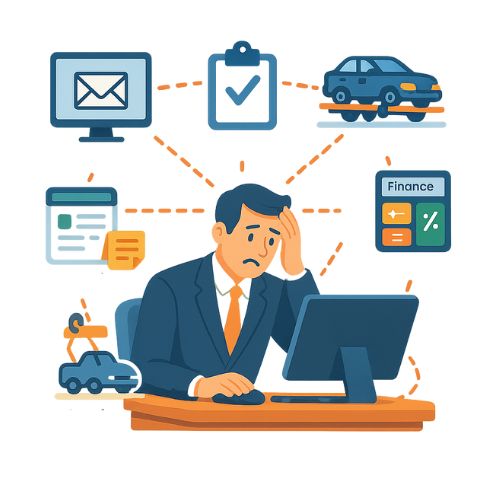
What accident management teams tell us again and again:
A national accident management provider came to us with a growing operational problem. They handled everything, first notification, repair booking, courtesy car hire, salvage, recovery, engineering, finance, but each part of the lifecycle sat in a different system managed by a different team.
Case history lived in a CRM. Repair updates came from a portal. Hire was tracked in spreadsheets. Recovery notes were buried in email chains. Financials were managed manually. Nobody could see the whole picture, delays were impossible to predict and staff spent most of the day chasing updates rather than progressing cases.
The outcome was entirely predictable: slow cases, rising costs, missing updates, frustrated customers and significant operational drag.
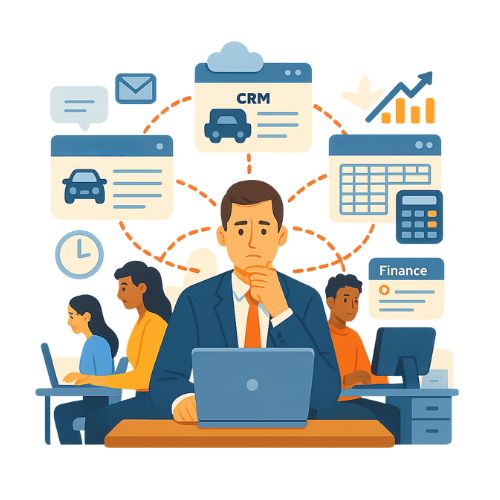

The business operated in a high-pressure environment where delays immediately affected cost, client experience and recovery value, and needed a platform that could manage the full end-to-end lifecycle.

Their multi-system setup created bottlenecks everywhere. Nothing connected, nothing updated automatically and no one had a reliable overview of the real case position.

We built a unified accident management system using Zoho CRM, Creator, Sign, Flow and Analytics, automating the entire lifecycle from FNOL to final invoice.

The organisation now runs every stage through a single platform, increasing efficiency, accuracy, visibility and financial control across the entire operation.
Their fragmented setup was affecting every part of the workflow. Staff constantly jumped between systems, re-typing data, checking updates manually and chasing providers for information already recorded somewhere else. Case progress depended on memory, follow-up emails and individual judgement, leaving huge room for inconsistency.
Hire vehicles expired before repairs were completed. Recovery timelines were missed because nobody flagged them. Salvage delays created financial exposure. Engineering reports got buried in inboxes. Finance figures didn’t match operational reality because nothing was truly linked.
Managers couldn’t confidently see caseload, performance or risk. Every report required cross-checking and manual reconciliation. As volumes increased, the operation buckled under its own weight.
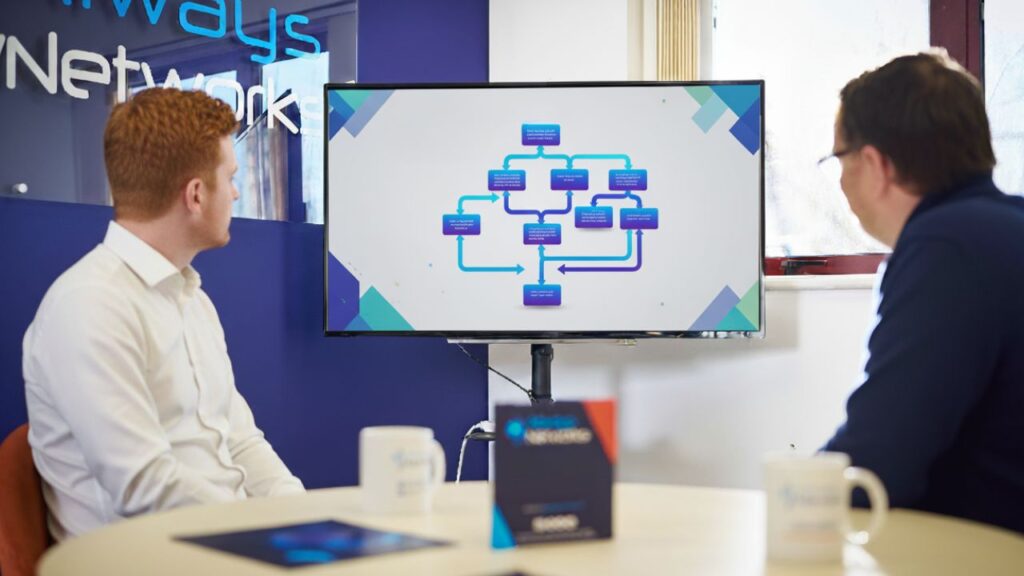
Leadership knew that without a centralised, automated system, scaling the business would only multiply the chaos. They needed a single operational engine capable of running the entire accident lifecycle.
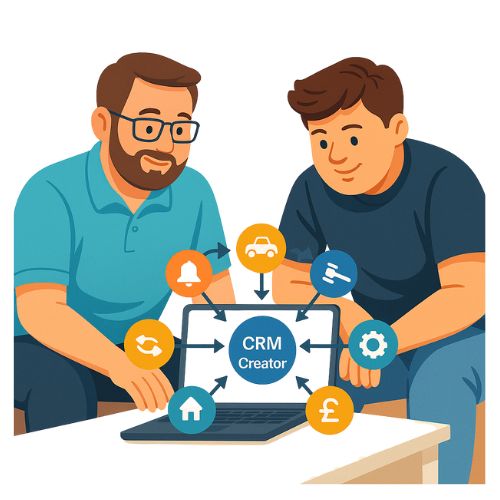
We mapped the entire accident management journey inside Zoho CRM and Creator, replacing disconnected processes with a single structured workflow. CRM became the central record for cases, vehicles, clients, repair stages, hire durations and financials.
Zoho Creator handled each area, FNOL, repair progress, hire management, salvage, recovery, engineering, invoicing, with structured, predictable workflows. These applications ensured every step happened in order, triggering the right next actions and preventing cases from falling out of sync.
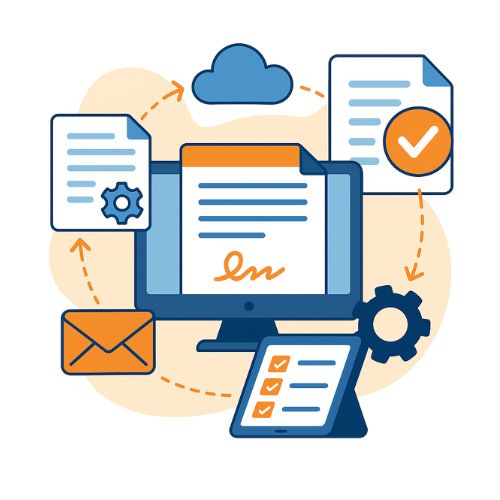
Zoho Sign was implemented to automate every document: hire agreements, repair authority forms, engineer instructions, recovery approvals, salvage documents and final invoices. Documents generated automatically, were sent instantly and returned to the correct case record without staff involvement.
Zoho Flow connected all moving parts, extending hire when repair dates changed, notifying staff of delays, syncing data between providers and ensuring the entire process stayed aligned without manual chasing.
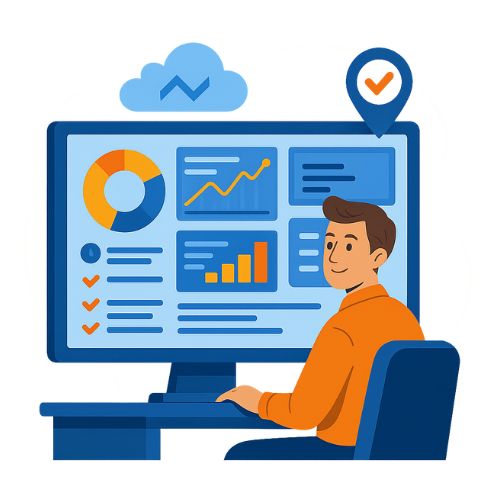
With all case data flowing into one structure, we used Zoho Analytics to build real-time dashboards covering repair stages, hire utilisation, salvage and recovery timelines, engineering status, financial exposure and ageing.
Managers now have live visibility over the entire operation instead of waiting for spreadsheets that never truly matched reality.
We developed extensive Deluge logic to automate everything from hire duration calculations to repair milestone checks, recovery reminders, engineering triggers and financial updates.
Through API integrations, the system connected to repair networks, hire providers and recovery platforms so staff no longer needed to check multiple portals. Updates flowed directly into the case record, instantly and accurately.

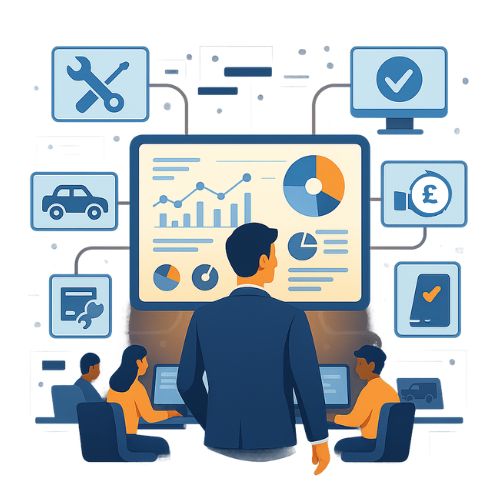
The shift has been dramatic. The company now operates through one unified system rather than a collection of disjointed tools. Cases move faster, more accurately and with far fewer manual delays. Documents are instant. Financial data updates automatically. Managers can finally see the full lifecycle at a glance, and teams spend their time progressing cases, not hunting for information.
Most importantly, the operation is now scalable. Growth no longer increases complexity; the system absorbs it.
This platform is now the backbone of the business, supporting every partner, every process and every financial movement with consistent, structured clarity.
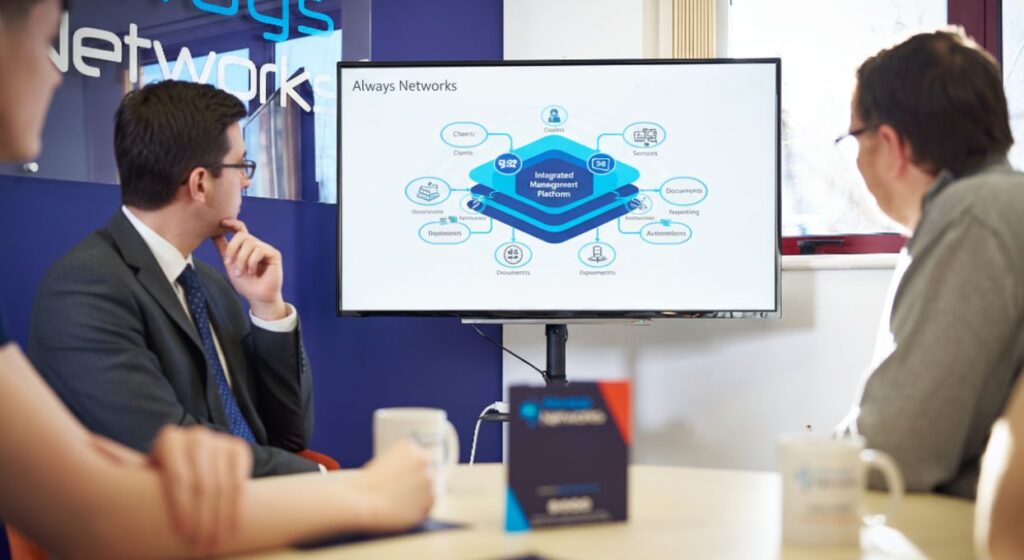
At Always Networks, we build fully connected operational systems powered by the Zoho ecosystem. These aren’t off-the-shelf CRM installations or light-touch configurations. They are full-scale business platforms that bring together every part of your operation, data, documents, communication, workflow, compliance, reporting and automation, into one unified environment.
The aim is straightforward: remove the noise created by scattered tools and replace it with a single system that mirrors the way your organisation actually works.
Instead of juggling separate spreadsheets, portals, drives and apps, everything you manage, clients, cases, services, approvals, documents, conversations and performance data, lives and moves inside one cohesive platform designed to keep your entire business aligned.

Delays in accident management almost always come from one source: information sitting in different places. When repair updates are in a portal, hire extensions are in emails, recovery timelines are in spreadsheets and financials are in a separate system, staff spend hours trying to manually piece the story together. This inevitably causes missed updates, expired hire periods, stalled repairs and frustrated customers.
A fully integrated accident management platform removes every one of these friction points. Repair progress, hire durations, recovery milestones, salvage updates and financial data all feed into the same structured workflow. When a repair stage changes, hire is extended automatically. When a recovery date moves, the team is notified instantly. When engineering reports are completed, the case advances without staff intervention.
The system becomes the source of truth. Cases flow continuously. Staff no longer chase information, they receive it, instantly, in the right order. That reduction in manual handling is what cuts delays, accelerates throughput and creates a predictable, scalable operation.
Yes — and it does it more effectively than any manual process ever could. Financial leakage in accident management comes from small, repeated failures: hire vehicles running longer than necessary, repair delays going unnoticed, salvage updates being missed, recovery timelines not followed and incorrect data being entered across systems.
A connected platform eliminates these issues by automating the rules that protect your revenue. Hire durations adjust when repair stages change. Delays trigger alerts automatically. Recovery dates generate reminders. Salvage steps move the case forward without waiting for staff to spot an update. Engineering reports are requested at the right moment, not days later.
Every event in the lifecycle becomes predictable and trackable. Instead of reacting to problems after they’ve cost money, the system prevents the problems from happening in the first place. That’s how automation stops leakage, by enforcing the right actions at the right time, every time, with zero exceptions.
Compliance in accident management collapses when documents and updates are scattered across multiple systems. Critical evidence sits in inboxes, forms live in shared folders, engineer notes are uploaded somewhere else and approvals are hidden in threads. This forces staff to manually check, re-check and search through multiple systems just to complete a basic audit trail.
A unified system removes this chaos entirely. Every document, hire agreements, repair authority forms, recovery approvals, engineering reports, salvage evidence, final invoices, is generated automatically, sent instantly and stored directly against the case record. Nothing can be lost, forgotten or filed incorrectly because the system handles everything end-to-end.
Audit trails become complete, timestamps become accurate and compliance stops being a constant chase. Managers gain full visibility of overdue reports, missing signatures and incomplete steps. The platform enforces the process so compliance is built in, not bolted on.
Traditional reporting in accident management is reactive and usually inaccurate. Teams wait for spreadsheets, manually reconcile data between systems and try to guess where cases are actually up to. By the time a report lands, it’s often already out of date — which is why bottlenecks, delays and escalating costs catch teams off guard.
Real-time reporting changes everything. With a unified platform, every repair milestone, hire update, salvage action, recovery movement and financial change updates the dashboard instantly. Managers don’t need to ask for information — they can see everything as it happens.
This gives leadership immediate answers to operational questions:
How many cases are stalled?
Which repairers are causing delays?
Where is hire cost starting to escalate?
Which recoveries need escalation?
How many engineering reports are overdue?
What is this week’s financial exposure?
Instead of reacting to fires, teams can see problems forming before they become costly. That shift from “after the fact” to “in the moment” is what unlocks operational efficiency.
Specialist tools often look powerful in isolation, but accident management depends on the relationship between stages, not individual tasks. A hire tool doesn’t help if repair dates change and nobody updates it. A repair portal is useless if the update doesn’t trigger recovery planning. A great spreadsheet means nothing if staff forget to update it when salvage times shift.
Multiple tools create operational blind spots. The moment information moves between systems manually, you introduce risk, delay and inaccuracy.
A single connected platform solves this by removing the gaps entirely. Every stage, FNOL, repair, hire, salvage, recovery, engineering, finance, exists within one structured workflow. Data moves automatically, logic is enforced consistently and the organisation works as one rather than as a chain of disconnected departments.
This doesn’t just make the process more efficient.
It makes the entire business scalable, predictable and significantly more profitable.